by indigiseo | Mar 8, 2026 | Blog
Going to the gym can seem like a task, but it’s something we need to do for our overall body health. But where to start? What equipment to use? And how to do a particular exercise? That’s where strength training, especially upper body workouts in the gym comes in.
One of the most important parts of working out is the upper body, which contains the core of the body. In this blog, we’ll find out some of the top upper body workouts and exercises to build muscles along with some of the most frequently asked questions about upper body weight training.
Upper Body Workouts | Upper Body Exercises For Gym
There are 7 top upper body workouts that you need to know about when starting out. From the basic pullups to advanced gym exercises like the front raise, we’ve got everything covered with step-by-step instructions on how to do them. Let’s take a look at upper body exercises for gym:
1. Pullups
If you are proficient with doing pull-ups frequently and well, this alone demonstrates much about your overall endurance and upper body strength and fitness.
How to do a pullup for upper body exercise:
1. Grasp the bar at a shoulder-width distance and hang from the bar until your arms are straight and palms facing away from you.
2. Through the power of your back muscles and arms, bend your elbows as you pull your body upward until your chin goes above or over the bar level.
3. Lower yourself back to the starting position.
4. Repeat.
2. Overhead Press
This is a great workout for core stability and the shoulders. The dumbbell version is an active workout that helps increase shoulder size and muscles in the elbow, which in turn helps to grow the triceps.
How to do an Overhead Press for upper body exercise:
1. Stand with your feet at shoulder-width.
2. Hold a barbell or dumbbell at shoulder height. (palms facing towards you)
3. Extend arms straight up, extending completely.
4. Lowering weight back to shoulder height.
5. Repeat.
3. Pushup
The pushup is an exercise that works your entire body and helps you get stronger and burn extra calories, and a good exercise for flexibility, balance, and good posture.
How to do a Pushup for upper body exercise:
1. Assume a plank position with your body in a straight line.
2. Lower your entire body until your chest is nearly touching the floor.
3. Push through your hands to return your body to the starting position.
4. Repeat.
4. Dumbbell Bench Press
The dumbbell bench press is a compound exercise done with dumbbells instead of a barbell to obtain power and strength in the upper body.
How to do a Dumbbell Bench Press for upper body exercise:
1. Lie on the bench by grasping a dumbbell with each hand; the palms should be in front.
2. Your feet should be on the floor.
3. Slowly push the dumbbells up until your arms are fully extended.
4. Lower the arms back to chest level slowly.
5. Repeat
5. Biceps Curl
The bicep curl is one of the basic weight-training exercises to build the biceps by bending the arm at the elbow and moving a weight towards the shoulder.
How to do a Biceps Curl for upper body exercise:
1. Stand with feet apart at shoulder-width.
2. Hold a dumbbell in each hand with your palms facing towards you.
3. Keep your upper arms still; bend your elbows holding the weight up towards your shoulders
4. Repeat
6. Face Pull
A Face Pull is a resistance exercise focusing on developing strength in the upper back muscles and the muscles of the shoulders. It is considered one of the most important upper body exercises for overall shoulder health and strength.
How to do a Face Pull for upper body exercise:
1. Stand facing a cable machine with the rope attachment set to about upper chest height.
2. With your palms turned toward each other, grasp the rope with both hands.
3. Pull the rope into your face area, keeping your elbows up,
4. Squeeze your shoulder blades together.
5. Repeat
7. Front Raise
The front raise is an exercise that uses weights, which is useful for increasing the mobility of your shoulders and strengthening them. Thus, it is very useful in everyday activities like carrying groceries or putting something on a shelf.
How to do a Front Raise for upper body exercise:
1. Stand with a position of the feet shoulder-width apart and hold a dumbbell in each hand, palms facing down.
2. Raising the dumbbells directly in front of the body until the arms are parallel to the ground.
3. Repeat
Conclusion
Whether you’re a beginner or someone with advanced training, knowing how to properly train your upper body is a must. Upper body exercises like pullups, overhead presses, pushups, dumbbell bench presses, bicep curls, face pull, and front raise can have multiple benefits. These exercises can help you increase the mobility of your shoulders, build your core, and strengthen your upper body.
FAQ’s
What Is The Best Upper Body Workout?
The best and simplest upper body workout is the combination of pushups and pullups.
Is It Ok To Do Upper Body Everyday?
No, doing upper body exercises every day causes overtraining and an increased risk of injuries.
What Are The 5 Major Upper Body Muscle Groups?
The 5 major upper body muscle groups are the Biceps, triceps, and forearm muscles, Pectoral muscles (chest), Deltoids, and rotator cuffs (shoulders), Trapezius muscles (upper back), and Latissimus dorsi (sides and lower back.)
Can I Train Chest And Back Together?
Absolutely. You can train your chest and back muscles on the same day creating a balanced workout routine.
by indigiseo | Mar 8, 2026 | Aasan
8 Real Benefits of Superman Exercise You Need to Know
Never finished a long day with your shoulders hunched, back sore and breathing stilted?
I was one of those people until I discovered the benefits of superman exercise.
This easy action that never fails to draw ridicule on the internet, used to be my best friend in alleviating low-back pain, straightening posture and enhancing everyday strength, using none other than my body -and only the floor.
In a few days, I felt less insecure as I could stand in a taller and more fluid manner.
So, let us get into the explanation of why the superman exercise can be a revelation to you and how the efficient use of the superman pose can be retrofitted to any routine.
What Is the Superman Pose?
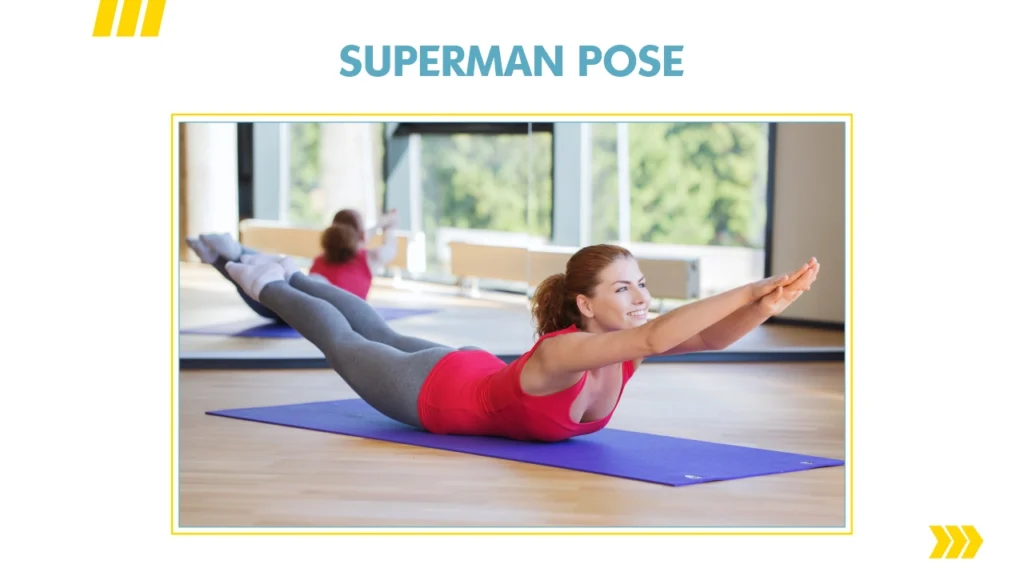
Superman pose exercise, also known as the superman pose yoga/body weight back extension involves the practice of lying face-down, with the arms extended in front of the body, in a manner that suggests that you are going to fly, which is followed by the movement of the arms and legs together.
It appears to be easy but involves multiple muscle groups at the same time.
Top Superman Exercise Benefits
Here are the most powerful superman exercise benefits I learned:
Strength in Back Muscles
The erector spinae- a chain that supports the spine is activated by the lifts. This increases the support in the spine and weakens chances of injury.
Improved Posture
Sleeping hours humped? This exercise powers up the muscles that help you to stand. It is described as a game changer.
Remedy of Lower Back Pain
The superman lifts are helpful daily to stabilize the lumbar sphere and minimize the pressure.
The Engagement of Full Posterior Chain
It wakes up the back deltoids and hard to reach areas, such as hamstrings, glutes and more. It’s the backbone of a posterior-chain.
Better Core Stability
You do not lift the back but work the abs, multifidus and obliques. Studies indicate that the stronger the core, the easier it moves and less injuries it entails.
Increase in Mobility/ Flexibility
Weak extension of the spine makes the back flexible without straining it especially when you sit a lot and it leaves the hips stiff.
No-Equipment, Easy Version
No mat, no tools–and you and the floor. It is affordable and pocket-friendly
Enhanced Mind – Body Connection
Keeping the focus on lift of arm and leg attracts consideration on breathing and motion.
How to Do the Superman Pose Exercise Safely
Follow these steps for proper form:
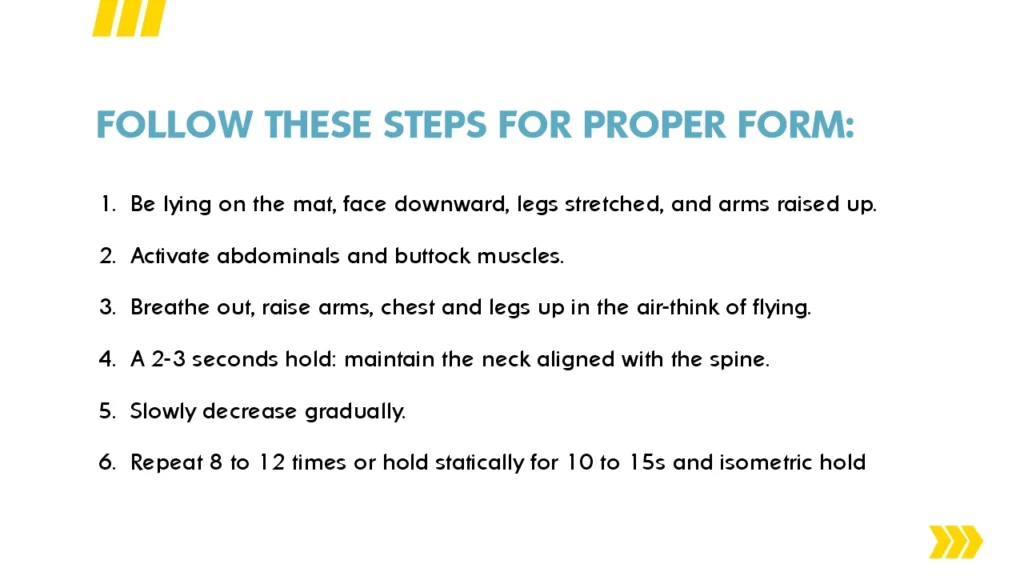
- Be lying on the mat, face downward, legs stretched, and arms raised up.
- Activate abdominals and buttock muscles.
- Breathe out, raise arms, chest and legs up in the air-think of flying.
- A 2-3 seconds hold: maintain the neck aligned with the spine.
- Slowly decrease gradually.
- Repeat 8 to 12 times or hold statically for 10 to 15s and isometric hold
Superman Exercise Variations
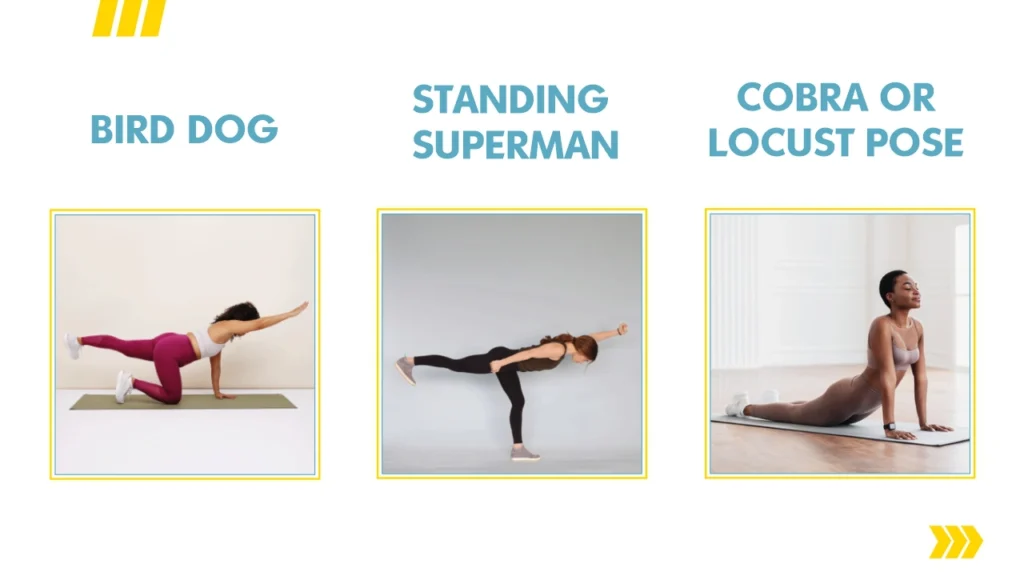
Bird Dog: While on hands and knees, reach opposite arms and legs out. Good for balance and oblique stability.
Standing Superman: While standing, hinge back at your hips and extend one arm and opposite leg. Good for balance.
Cobra or Locust Pose: A yoga back-bend variation that includes lifting the chest and upper-back instead of the legs.
Hints in Preparation
Keep it loose – don’t violently extend;
If your neck and/or lower back are sore, reduce range-of-motion, or make breaks between repetitions.
If you’re pregnant, just had abdominal surgery, or have some of the above rapid injurious events, modify or skip.
Finally, first begin with a simple hip-hinge, or a series of cat-cow to warm-up your lower-back and hamstrings.
Conclusion
In conclusion, the benefits of the Superman Exercise are more than looks.
It strengthens your back, helps develop better posture, feasts on unwanted pain, and keeps you consistent with everyday activity and ease.
It is a low- impact but high-value exercise that you can do anywhere!
If you sit a lot or often feel stiff, this exercise could have a meaningful change with little work. For the next week add a few repetitions each day, and see how your body feels.
FAQ’s
How often should I do Superman Exercise?
You may do it everyday, as long as it doesn’t irritate you. For added strength you would do it 2-3 times per week. Use either 8-12 repetitions or statically hold 10-15 seconds.
Will the Superman Exercise give me a big butt?
Yes, it is activating your glutes but it isn’t a butt workout. Consider it the bonus for spinal support.
Can Superman Exercise help my hunched shoulders?
Yes it helps with shoulder retraction because it activates the posterior chain to help improve your upper-body posture.
Is it safe for beginners?
Yes, just go slow. Reddit users mentioned that it helped their posture.
Should I static hold at the top or do repetitions?
Both are good for you! You may do one set of dynamic repetitions and static holds every time after that for some extra tension.

by indigiseo | Mar 8, 2026 | Exercises
5 Gym Exercises to Boost Your Height Naturally: The Do’s and Don’ts
Many adults dream about gaining additional inches to their height.
The genetic factor defines our height potential but exercises in the gym to increase height allows us to reach the fullest extent of our height potential.
Your height can increase and your confidence improve through exercises that build posture and strengthen your spinal cord muscles. Specific workout routines play a role in the height enhancement process so we will examine their uses in this journey.
Can Gymming Increase Height?
The question stands: can gymming increase height?
The practice of gym fitness will not physically increase your bones but it will enhance your posture and tighten your muscles and decompress your spine for a taller appearance. Exercising regularly stimulates the release of growth hormone that presents potential advantages for growing individuals.
Effective Exercises in Gym to Increase Height
These workout exercises in gym to increase height including the following:
Hanging Exercises
The human body can potentially increase height through long-term bar hanging because this activity decompresses the spine. Hanging for 20-30 seconds needs to be repeated 3-5 times on a daily basis.
Cobra Stretch (Bhujangasana)
The practice of this yoga pose both extends spinal regions and strengthens your back muscles thereby helping your posture. Maintain this position between 15 to 20 seconds with three repetitions each.
Pelvic Tilts
Slim down onto your back position with knees curved and feet pressed firmly on the floor. Next perform a pelvic lift following by a brief hold and then lower the position. Through this exercise people train their lower back muscles thus improving their posture.
Skipping Rope
The practice of skipping triggers hormone activation while it strengthens bone structure. The workout starts with daily sessions between 5 to 10 minutes before you raise the duration gradually over time.
Swimming
From head to toe stretching occurs in swimming which beautifies posture and enhances flexibility through its effects on the spine. Participating in swimming sessions on a regular basis supports height growth.
So, Gym Can Increase Height: Myth or Reality?
Many wonder, does going to gym increase height?
Or the statement that doing gym can increase height is partially true.
Gym activities do not lengthen your bones but practising at the gym will enable you to reach your full height potential. Exercise plays an essential part in securing proper posture and correct spinal alignment.
Propelled by strong core muscles and flexible body the person becomes more upright with enhanced stature. Exercising to enhance spinal wellness and posture will produce the effect of increased height combined with boosted confidence levels.
Increase Height in Gym: Tips and Tricks
To effectively increase height in gym, consider the following tips:
Consistency is Key: Regular workouts yield better results.
Focus on Posture: Incorporate exercises that strengthen back and core muscles.
Stretch Regularly: Stretching exercises improve flexibility and spinal health.
Stay Hydrated: Proper hydration supports overall health and muscle function.
Balanced Diet: Ensure adequate intake of calcium, vitamin D, and protein to support bone health.
Workouts to Increase Height: A Routine
Here’s a sample routine focusing on workouts to increase height:
- Monday: Hanging exercises, cobra stretch, pelvic tilts
- Wednesday: Skipping rope, swimming, spine stretches
- Friday: Yoga session focusing on poses like Tadasana and Bhujangasana
Exercise for Increase Height: Do’s and Don’ts
When engaging in exercise for increased height, keep these in mind:
Do’s:
Maintain proper form to prevent injuries.
Combine strength training with flexibility exercises.
Get adequate rest to allow the body to recover.
Don’ts:
Avoid overtraining, which can lead to fatigue and injuries.
Don’t neglect nutrition; it’s vital for growth and recovery.
Steer clear of exercises that strain the spine excessively.
Which Gym Exercise Stops Height Growth?
A common concern is which gym exercise stops height growth. While most exercises are safe, certain activities, if done improperly, can hinder growth:
Heavy Weightlifting: Lifting very heavy weights, especially without proper form, can compress the spine.
Overhead Presses: Excessive overhead lifting can strain the spine.
High-Impact Activities: Activities like heavy squats or deadlifts, if done incorrectly, can affect spinal health.
Increase Height Exercise in Gym: Final Thoughts
Implementation of increase height exercise through gym workouts provides major benefits for both posture stability and physical appearance.
These exercises will not increase your physical height but they will enhance your posture leading to increased self-confidence. The combination of consistent workouts combined with correct technique alongside life-dimension balance leads to top-quality outcomes.
FAQ’s
Can I combine yoga and gym workouts to increase height?
Definitely. The ideal strategy for height growth combines exercises that stretch from yoga together with both strength training and cardio workouts. Posture along with flexibility and muscle health are supported by this method leading to potential height improvements in gym work.
How long does it take to see results from height-related gym exercises?
It varies. Regular practice of height-enhancing exercises at the gym results in posture and appearance improvements in a timeframe between 4 and 8 weeks for numerous individuals. Teens who wish to grow taller will need more time based on their genetic background alongside their overall lifestyle choices
Is it safe to lift weights if I want to grow taller?
Using weight training requires both cautious amounts of exercises and accurate proper techniques for safety purposes. Heavy lifting must be avoided at all times especially when no supervision is present. People should concentrate on bodyweight routines coupled with stretching exercises and activities which do not compress the spine.
What’s the best time to do increase height exercise in gym?
Morning workouts are ideal. A nighttime decompression of your spine continues into daytime length when you perform your exercises in the morning. You should maintain your increase height exercise practice at the gym no matter what time it is.
Are stretching exercises effective for increasing height?
Absolutely. stretching practices regularly promote good posture along with sustained lengthening of the spine. Your workouts to boost height should contain three specific stretches which include cobra pose, toe touches and hanging exercises.
by indigiseo | Mar 8, 2026 | Blog
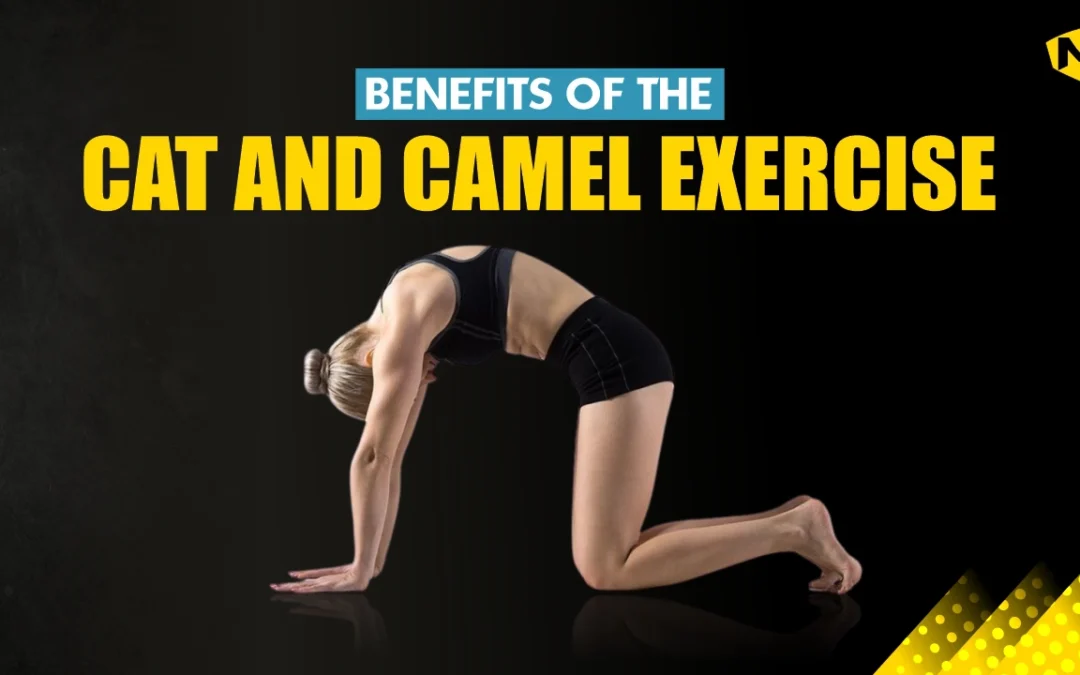
5 Benefits of the Cat and Camel Exercise
Sitting long hours in your office or having a long seated trip, it becomes tiring and uncomfortable.
But to give a solution to this cause, this beginner-friendly exercise where you wouldn’t need any equipment, can help you out.
Let’s understand what the benefits of the cat and camel exercise can be so effective and how you can add this into your routine.
What Is the Cat and Camel Exercise?
The cat and camel exercise is an inspiration from two yoga poses: Marjariasana and Ustrasana.
This exercise stretches and warms up your spine, helping you have relief from back pain and stiffness.
It’s a rhythmic flow where you make an arch with your back (cat pose) and then dip your belly while lifting your head and tailbone (camel pose). You can add this stretch to your fitness routines and warm-ups.
Benefits of the Cat and Camel Exercise
Eases Back Pain and Tension
Many of us spend hours sitting, which can leave with a stiff and sore back. The cat and camel stretch helps to release that built-up tension by extending your spine. It gives you relief for your lower back and mid-back.
Improves Spinal Flexibility
Regularly practicing the exercise keeps your spine flexible. There are also many other simple yoga poses to help in posture like Baddha Padmasana and Vajrasana.
Boosts Circulation
The rhythmic motion improves blood flow to the spinal discs and muscles. Better circulation means your body is healing and recovering faster, making you feel energized.
Promotes Relaxation
With a proper breathing form, you can calm your mind and body. It’s a great way to relax after a long day or prepare for a good sleep.
Strengthens Core and Stabilizing Muscles
It’s a gentle exercise, but with that you also engage your core muscles. This helps you have a better posture and balance over time.
How to Perform the Cat and Camel Exercise?
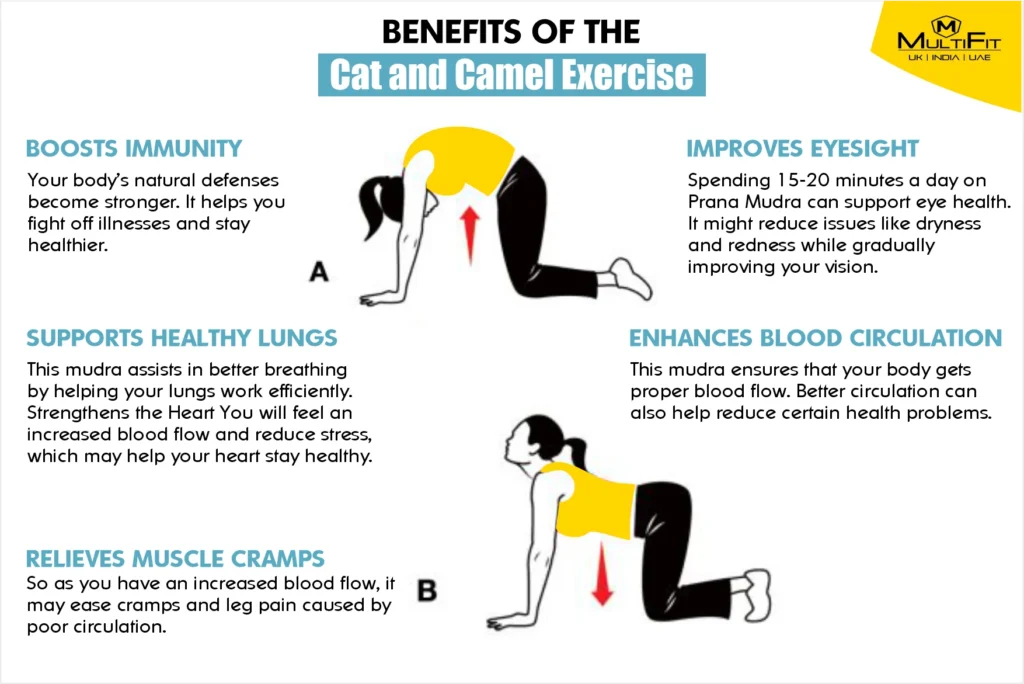
1. Come to your hands and knees, keeping your hands under your shoulders, your knees under your hips, and your back in a neutral position.
2. Cat: With your tailbone sticking out, bend your spine so that it curves with your back, and simultaneously lift your head and lower it toward the floor. Take a big breath out at the same time.
3. Camel: To make a camel hump, tuck your head and tailbone in and arch your back. Take a big breath in at the same time.
When to Use the Cat and Camel Stretch
The cat and camel exercise is versatile and can fit into various parts of your day. Try it:
– First Thing in the Morning: Wake up your body and ease stiffness.
– Before or After Workouts: Use it as a warm-up or cool-down to keep your spine happy.
– During Breaks: Spend a few minutes stretching during a long day of sitting to recharge.
– As Part of Yoga Practice: Combine it with other poses for a complete routine.
Final Thoughts
The cat and camel exercise is more than just a stretch.
It helps you to feel less stress, and also have a healthier spine.
This blog is aimed to help you improve flexibility and also to show how this relaxing stretch offers. Doing joint-function training, group dynamics, HIIT, or endurance training can help you even further; Mind, Body and Soul.
FAQ’s
Can beginners do the cat and camel exercise?
Absolutely! It’s a low-impact stretch for anyone willing to try. Start slow, and listen to your body.
How often should I do the cat and camel stretch?
Do 1-2 times daily or whenever your back feels tight. Consistency is key.
Is it the same as the cat-cow stretch?
The terms cat-cow and cat and camel, they are actually the same. They refer to the same movement, combining the cat pose and the camel pose.
Can it help with posture?
Yes! The cat and camel exercise strengthens stabilizing muscles, which can improve posture over time.
by indigiseo | Mar 5, 2026 | Exercises
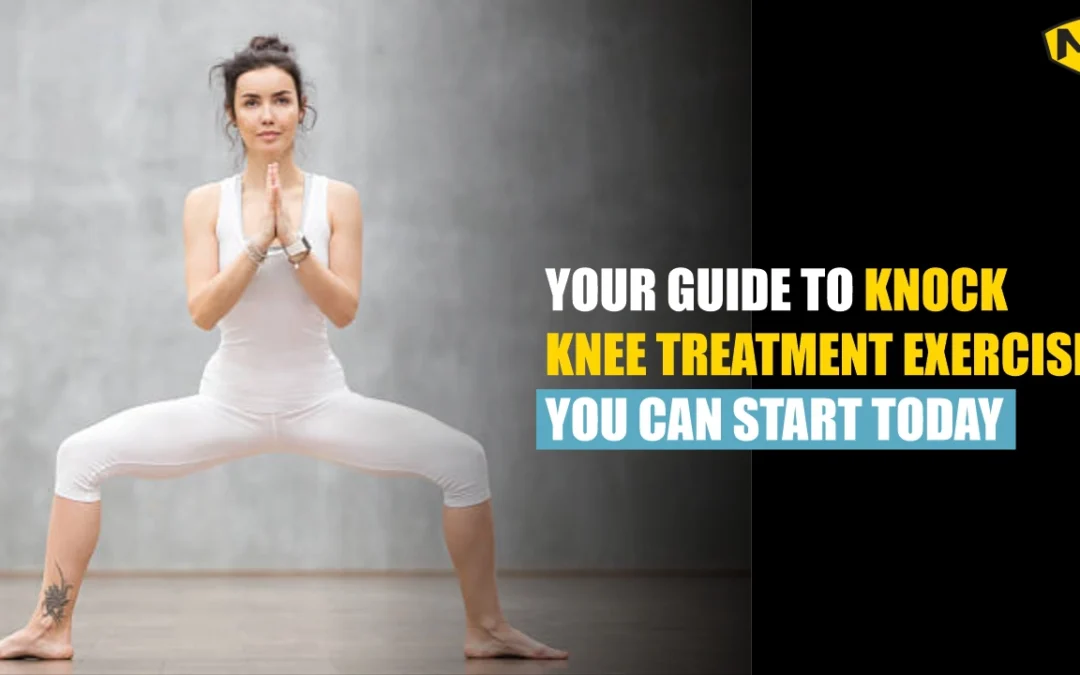
Your Guide to Knock Knee Treatment Exercise You Can Start Today
Have you ever been stationary and observed your knees sway inwards and it touches slightly even when your feet are apart?
It may be a minor thing, but eventually, it may alter your mobility, the manner of walking and even the condition of your joints.
Knock knees, or the technical term, ‘genu valgum’, is not all about appearance but may cause long-term unrest discomfort and joint strain as well as postural complications. The good news? With the right knock knee treatment exercise, the alignment can become better, the strength can be regained, and everyday movements can be simplified.
The question as to whether knock knees can be fixed in adults through exercise should not be one of surprise because it depends.
Why Do These Moves Matter?
Knock knee syndrome (genu valgum) implies that your knees turn inward.
This redirects the load on the reverse knee and in the long run, may have an impact on your hips, ankles and comfort.
However, your legs can be realigned with the help of targeted work, such as inner thighs and glutes strengthening.
These motions assist in contributing to the knee and direct muscles to maintain your hips and legs with improved position.
Core knock knee correction exercise Routines
Here are effective steps. They are simple, clear, and ready for daily practice:
1. Clamshells with resistance bands:
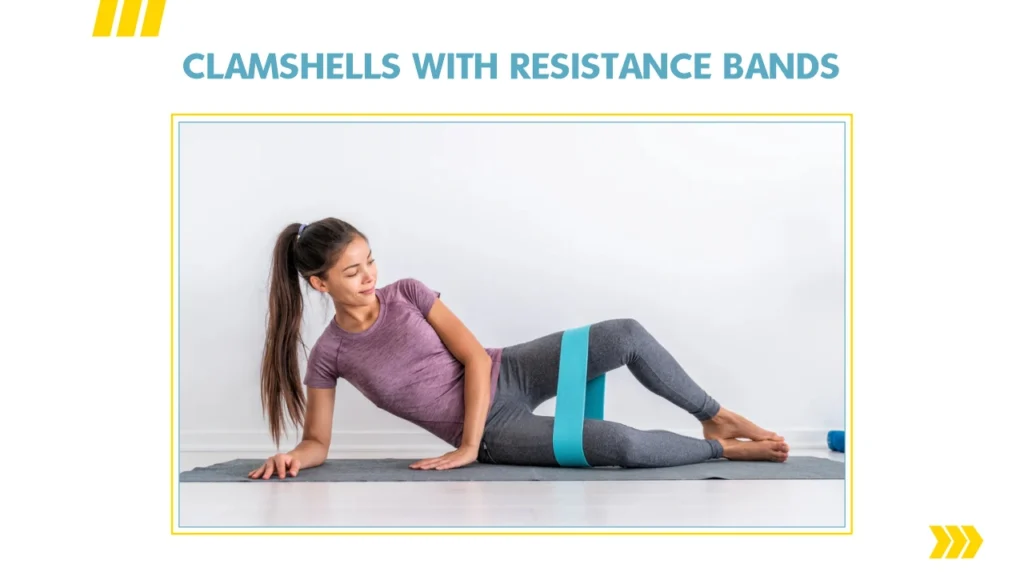
- Lying on your side, knees bent.
- Band around thighs.
- Lift top knee up, feet staying together. Control the rise and lower.
- Perform 3 sets of 15 reps each side.
Result: Gluteus medius is targeted to prevent knees from collapsing inward.
2. Single-leg glute bridge:
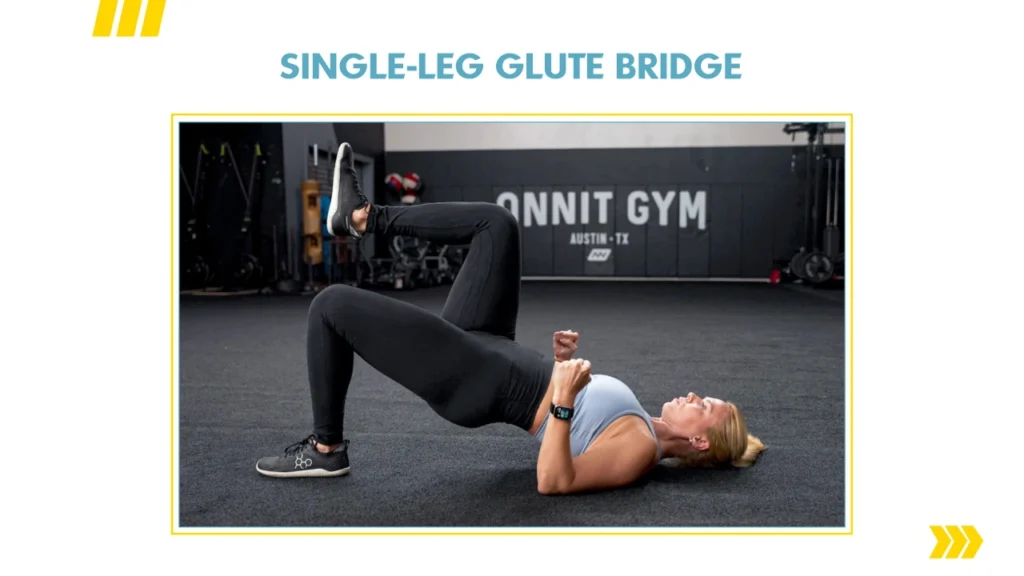
- Lying on back, knees bent, feet flat.
- Raise one leg straight, then lift hips into a bridge position.
- Hold for 2-3 seconds, then lower.
- Perform 3 sets of 12-15 reps each leg.
Result: Strengthening the glutes and hamstrings will provide better support for the knees.
3. Side lunges:
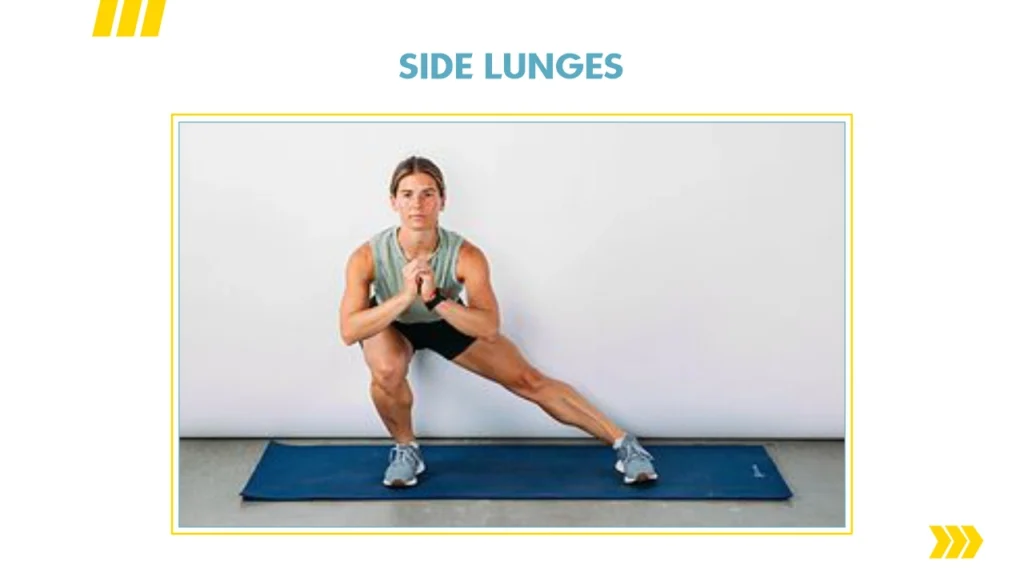
- Stand wide, feet apart.
- Shift your weight to one leg, pushing your knee forward while keeping the other leg straight.
- Repeat, returning to standing position.
- Complete 12 reps each side, for 3 sets.
Result: The adductors and abductors are strengthened, which work to keep knees aligned.
4. Wall squats with band:
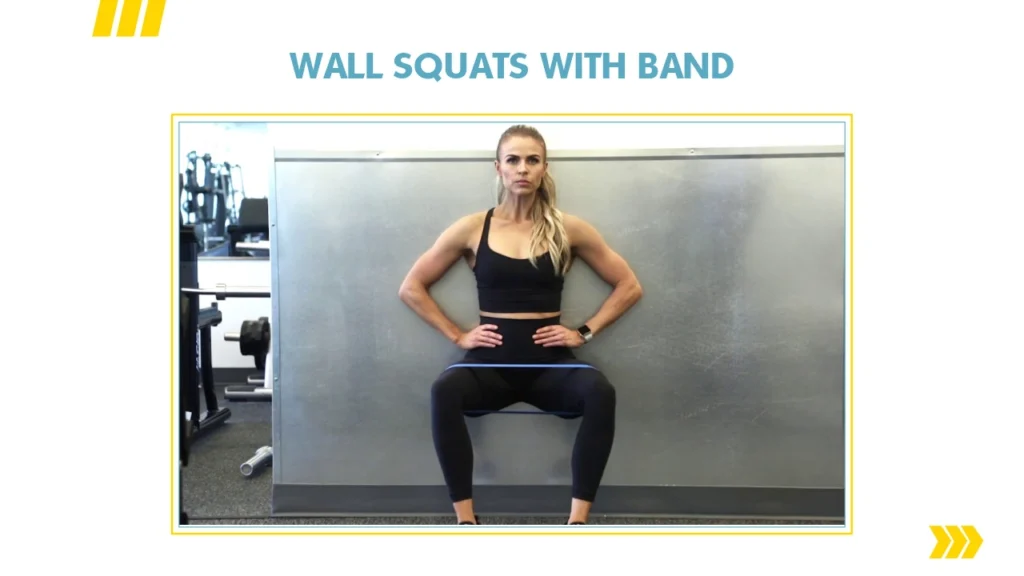
- Place the band above knees, just above the knee joint, and lean back against the wall.
- With feet shoulder width, slide down along the wall into a squat position, with knees aligned with feet.
- Hold for 30 seconds, then return to standing.
- Repeat 3 times.
Result: Goes to work to engage the glutes and quads to reinforce proper knee tracking.
5. Straight leg raises:
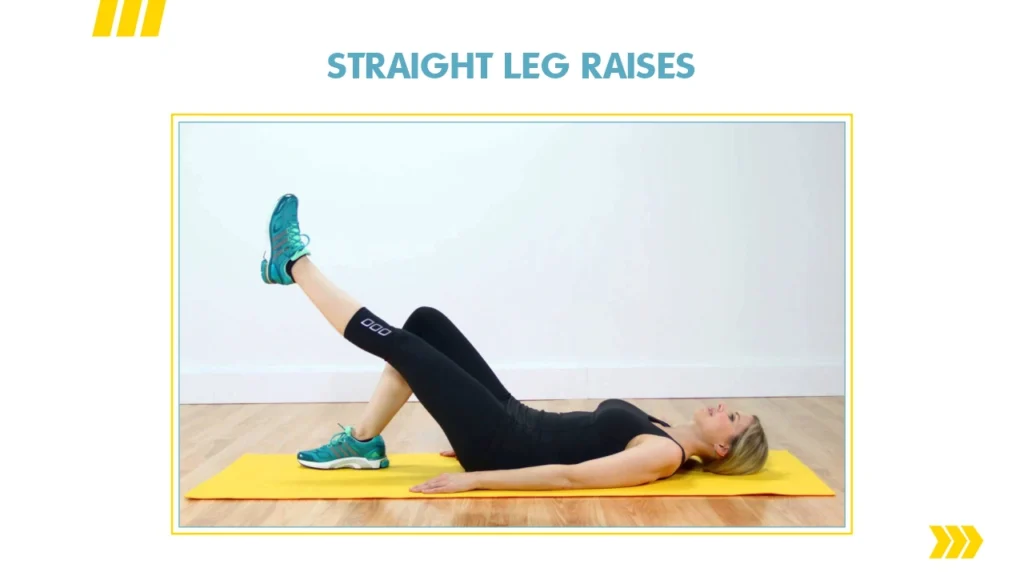
- Lying on your side, or back with leg straight.
- Lift the leg and lower with control in a slow manner.
- Complete 3 sets of 15 each leg.
Result: Strengthens the quadriceps and muscles about the hip that aid with leg alignment.
6. Butterfly stretch:
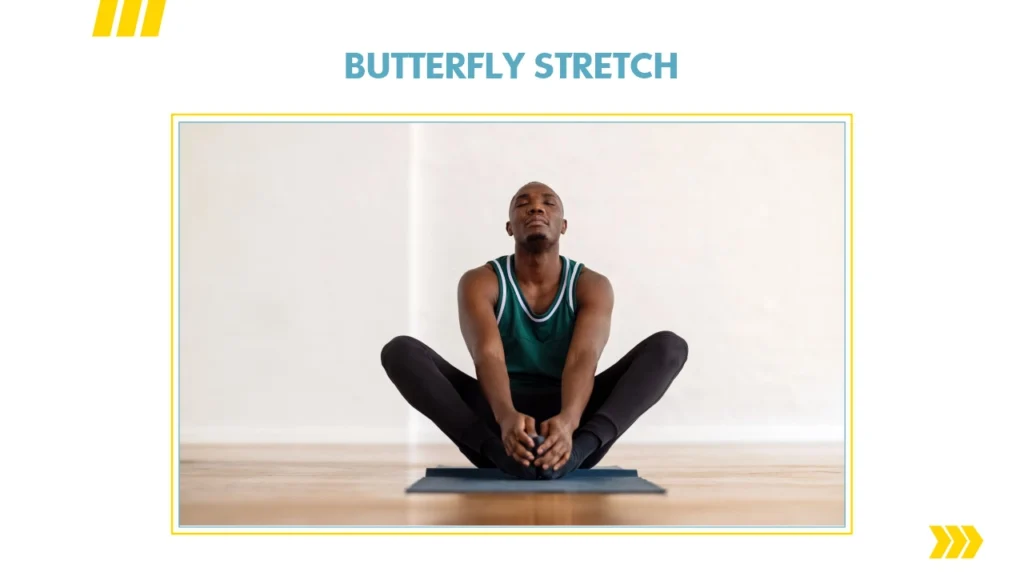
- Seated, soles of feet together and heels pulled in towards you.
- Gently press down with elbows on your knees, or simply lean forward gently.
- Hold for 30 seconds, repeat 3 times.
Result: Opens up the inner thighs allowing that tightness from having knock knees to relieve.
7. Seated hip internal rotation stretch:
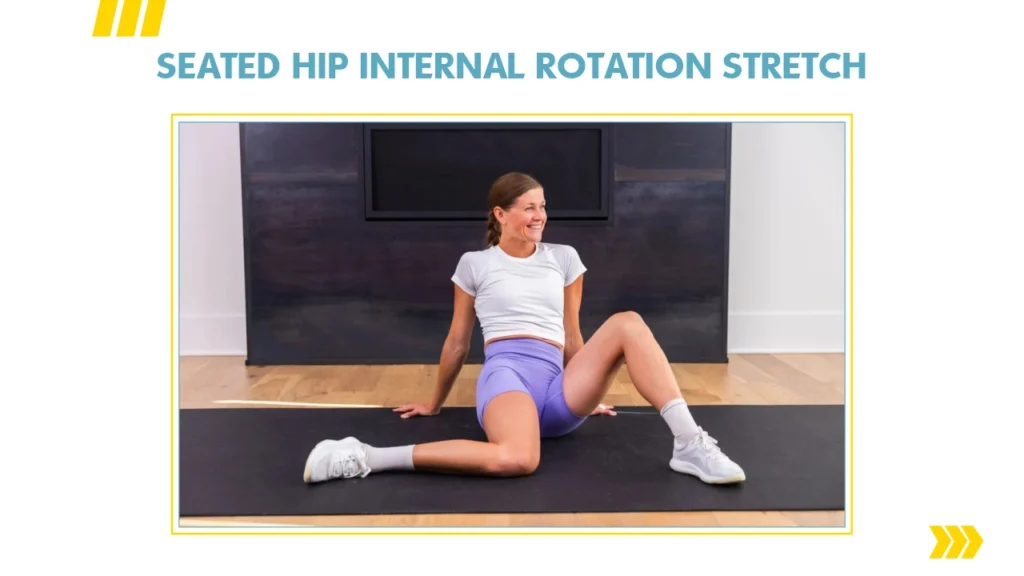
- Seated, cross one ankle onto the opposite knee.
- While in this position, lean forward slightly so you can feel your hip muscles start to open up.
- Hold position for 30 seconds each side.
- Repeat this 3 times.
Result: This stretch is particularly good for releasing hip rotators so the leg can align better.
Next-Level Tips for knock knees workout
Add calf and IT band foam rolling to ease tight muscles .
Wear arch-support footwear or orthotics to stabilize your feet and align your knees
Maintain healthy weight. Try following a 7-Day Diet Plan because having a healthy body will lighten the strain on knees.
Sample Weekly Plan for Corrective Knock Knees Exercise
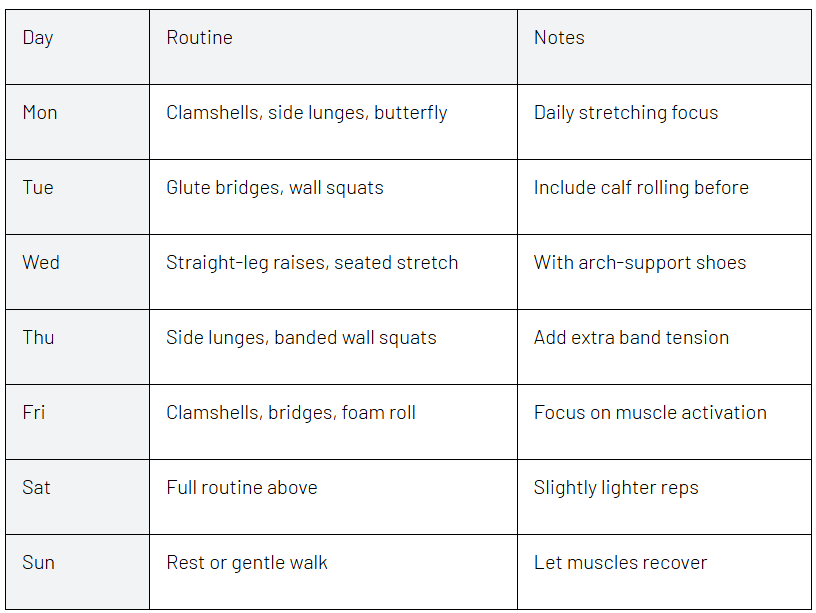
Conclusion
Our habits, posture and patterns of movement prefer to remain unnoticed to us until they actually start to influence us.
Knock knees can appear as a structural problem, but in most cases of adults, they are only the indicators of muscle imbalances which can be properly corrected with the correct strategy.
Even by signing up for functional training for knock knee treatment exercise, you are not only looking to create the form that your legs associate but looking to build strength, gain better stability and secure your joints in the long-term. As long as you’re consistent and aware, not only do you make progress, but also achieve it.
FAQ’s
How long before I see results?
An improving balance and posture can be observed within 4-8 weeks. There is a 3 to 6 month process of lasting correction, depending on the consistency of your routines.
How to correct knee knocking during daily tasks?
Be mindful: stand with knees over toes and squat with knees in the position of toes. Form can be checked using mirrors. When strength is gained, it is transferred during time.
Can knock knees be corrected in adults by exercise completely?
Yes, the significant percentage of adults improves, but it all is about whether the bone structure contributes to it or not. In case it is something to do with one of the muscles, then you are in the right direction.
What if I feel pain while doing these?
It is quite normal to feel a bit tight or sore, but your activity should be interrupted when sharp pain occurs. Warm up, decrease the number of reps and think of seeing a physiotherapist.
Should I add cardio?
Yes, it is cardio with low impacts such as walking, cycling, swimming that keeps the joints in line and contributes to weight management.